Korean Bibimbap
Highlighted under: Local Favorites
Korean Bibimbap is a vibrant and nutritious dish that combines rice, vegetables, and protein, all topped with a fried egg and a spicy gochujang sauce.
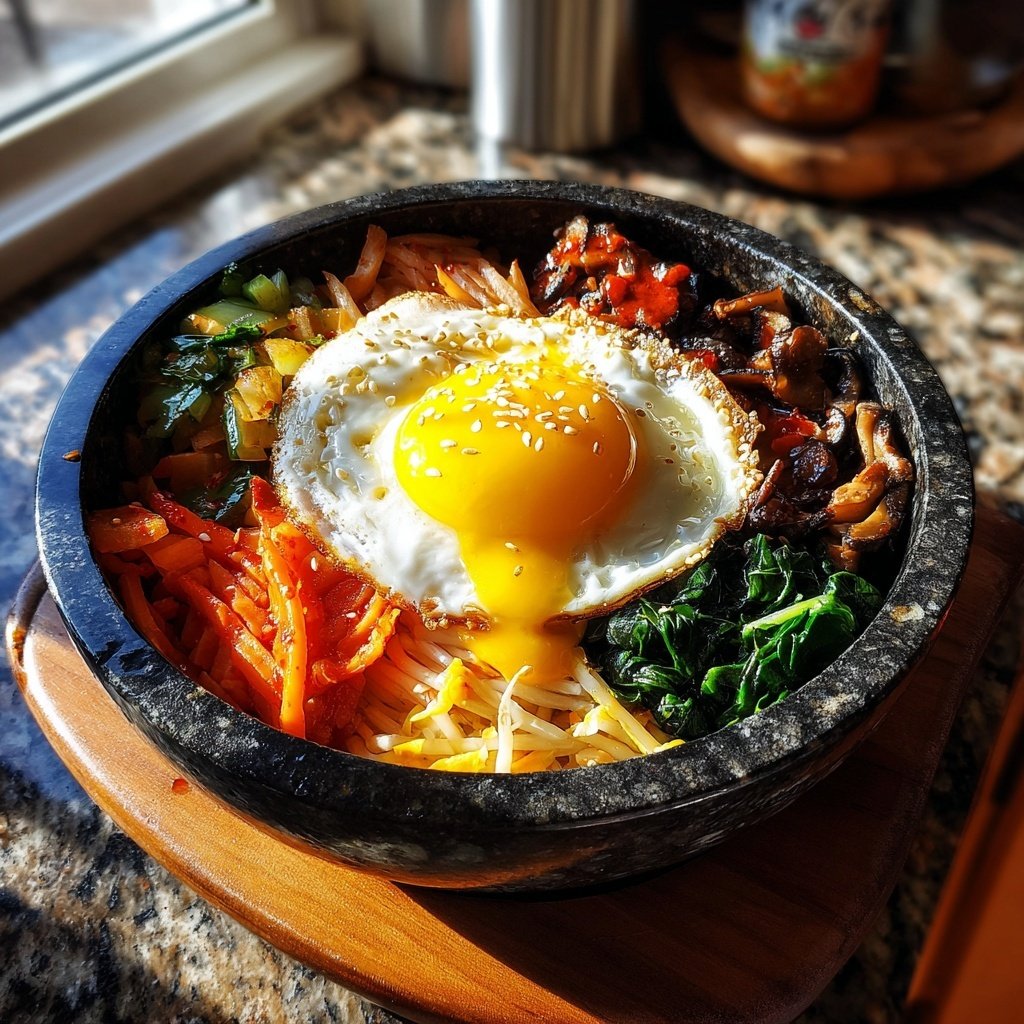
Korean Bibimbap is not just a meal; it's a delightful experience that brings together a variety of flavors and textures. Each ingredient contributes to a harmonious blend that is both satisfying and nourishing.
Why You'll Love This Recipe
- A colorful medley of fresh vegetables and proteins
- Customizable to suit your taste and dietary preferences
- A perfect balance of spicy, savory, and umami flavors
Understanding Bibimbap
Bibimbap is a traditional Korean dish that translates to 'mixed rice.' This culinary delight is not only visually stunning but is also packed with nutrients, making it a wholesome meal option. The name reflects the dish's essence, as all the ingredients are mixed together right before eating. Each component contributes to the overall flavor profile, ensuring a delightful eating experience with every bite.
The base of bibimbap is typically white rice, which serves as a neutral canvas for the vibrant array of vegetables. Common additions include spinach, bean sprouts, carrots, and zucchini, each bringing its unique texture and taste. The protein component often varies, allowing the dish to be customized to suit individual preferences, whether that’s with meat, tofu, or even a vegan alternative.
The Importance of Gochujang
Gochujang is a fermented Korean chili paste that adds a distinctive depth of flavor to many dishes, including bibimbap. Its unique combination of sweetness, spiciness, and umami makes it a key ingredient in achieving the authentic taste of this dish. The paste is made from red chili powder, glutinous rice, fermented soybeans, and salt, resulting in a rich and complex flavor profile.
In bibimbap, gochujang is often blended with sesame oil, sugar, and vinegar to create a sauce that perfectly complements the fresh vegetables and rice. This sauce not only enhances the dish's flavor but also adds a delightful kick that balances the meal’s overall taste. Adjusting the amount of gochujang allows you to control the heat level, making it easy to cater to your spice tolerance.
Serving Suggestions
Bibimbap is best served in individual bowls, allowing each person to mix their ingredients according to their personal preference. This interactive element makes it a fun dish for gatherings or family meals. You can also provide a variety of toppings such as sesame seeds, nori strips, or additional sauces to encourage customization.
For a complete meal, consider pairing bibimbap with traditional Korean side dishes, known as banchan. Items like kimchi, pickled radish, or seasoned greens can elevate your bibimbap experience, offering additional flavors and textures. A warm bowl of miso soup or a light salad can also complement this dish beautifully.
Ingredients
For the Bibimbap
- 2 cups cooked rice
- 1 cup spinach, blanched
- 1 cup bean sprouts, blanched
- 1 carrot, julienned
- 1 zucchini, julienned
- 1 cup shiitake mushrooms, sliced
- 2 eggs
- 2 tablespoons sesame oil
- Salt and pepper to taste
For the Gochujang Sauce
- 2 tablespoons gochujang (Korean chili paste)
- 1 tablespoon sesame oil
- 1 teaspoon sugar
- 1 tablespoon water
- 1 teaspoon rice vinegar
Feel free to add your favorite protein, such as beef, chicken, or tofu, to make this dish even heartier!
Instructions
Prepare the Vegetables
In a large skillet, heat sesame oil over medium heat. Sauté the zucchini, carrots, and mushrooms separately until tender. Season with salt and pepper. Set aside.
Fry the Eggs
In the same skillet, fry the eggs sunny-side up until the whites are set but the yolks are still runny.
Make the Gochujang Sauce
In a small bowl, mix together the gochujang, sesame oil, sugar, water, and rice vinegar until smooth.
Assemble the Bibimbap
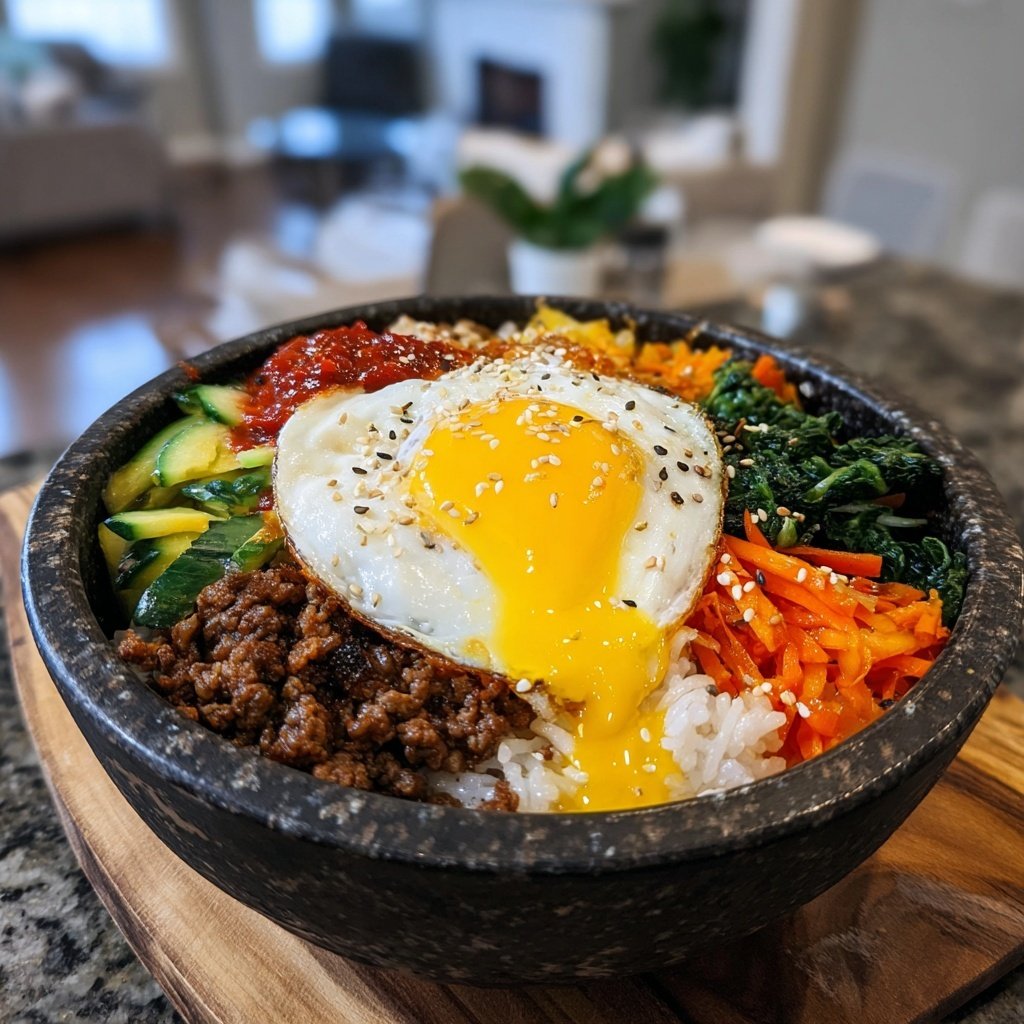
In a bowl, layer the cooked rice, sautéed vegetables, and blanched spinach and bean sprouts. Top with a fried egg and drizzle with gochujang sauce.
Mix everything together before eating for a burst of flavor!
Pro Tips
- For extra flavor, add a sprinkle of sesame seeds or sliced green onions on top.
Nutritional Benefits
Korean bibimbap is not only a feast for the eyes but also a powerhouse of nutrition. The diverse range of vegetables provides essential vitamins and minerals, while the rice serves as a great source of carbohydrates for energy. Depending on your choice of protein, you can also include healthy fats and additional nutrients, making this dish a balanced meal option.
The inclusion of gochujang brings health benefits as well. It contains capsaicin, known for its metabolism-boosting properties, and probiotics from fermentation, which can support gut health. With its combination of fresh ingredients and delightful flavors, bibimbap is a meal that nourishes both the body and the soul.
Storage and Leftovers
If you find yourself with leftovers, bibimbap can be stored in an airtight container in the refrigerator for up to three days. However, to maintain the quality of the ingredients, it's best to store the components separately, particularly the fried egg, to prevent sogginess. When ready to eat, simply reheat the rice and vegetables, and fry a fresh egg for the best taste.
For even more convenience, you can prepare the bibimbap components ahead of time. Cooked rice and sautéed vegetables can be stored for quick assembly during busy weeknights. This meal prep strategy allows you to enjoy a homemade, nutritious meal in a matter of minutes, making healthy eating easy and accessible.
Questions About Recipes
→ Can I make Bibimbap vegan?
Yes! Simply omit the eggs or use a vegan egg substitute.
→ What other vegetables can I use?
You can use any seasonal vegetables you like, such as bell peppers, broccoli, or radishes.
→ Is Bibimbap healthy?
Yes, Bibimbap is packed with vegetables and can be tailored to fit a healthy diet.
→ Can I prepare Bibimbap ahead of time?
You can prepare the vegetables and sauce in advance, but it's best to assemble the dish fresh for optimal flavor.
Korean Bibimbap
Created by: Seraphina Moore
Recipe Type: Local Favorites
Skill Level: Intermediate
Final Quantity: 2 servings
What You'll Need
For the Bibimbap
- 2 cups cooked rice
- 1 cup spinach, blanched
- 1 cup bean sprouts, blanched
- 1 carrot, julienned
- 1 zucchini, julienned
- 1 cup shiitake mushrooms, sliced
- 2 eggs
- 2 tablespoons sesame oil
- Salt and pepper to taste
For the Gochujang Sauce
- 2 tablespoons gochujang (Korean chili paste)
- 1 tablespoon sesame oil
- 1 teaspoon sugar
- 1 tablespoon water
- 1 teaspoon rice vinegar
How-To Steps
In a large skillet, heat sesame oil over medium heat. Sauté the zucchini, carrots, and mushrooms separately until tender. Season with salt and pepper. Set aside.
In the same skillet, fry the eggs sunny-side up until the whites are set but the yolks are still runny.
In a small bowl, mix together the gochujang, sesame oil, sugar, water, and rice vinegar until smooth.
In a bowl, layer the cooked rice, sautéed vegetables, and blanched spinach and bean sprouts. Top with a fried egg and drizzle with gochujang sauce.
Extra Tips
- For extra flavor, add a sprinkle of sesame seeds or sliced green onions on top.
Nutritional Breakdown (Per Serving)
- Calories: 500 kcal
- Total Fat: 20g
- Saturated Fat: 4g
- Cholesterol: 200mg
- Sodium: 600mg
- Total Carbohydrates: 70g
- Dietary Fiber: 5g
- Sugars: 4g
- Protein: 15g